The Abaya, Explained: From Desert Garment to Modern Wardrobe

The Atelier Journal
A garment older than most capitals, still being rethought every season.
An abaya is a loose, full-length outer garment worn across the Gulf and far beyond it — covering the body from the shoulders down, worn over clothing, and open to almost endless interpretation in cut, cloth and finish. The word is simple. What it holds is not.
Where it comes from
The abaya's ancestors were practical: wide woven cloaks suited to desert heat, cut generously so air could move. Over generations the garment settled into the form the Gulf knows today — floor-length, long-sleeved, most often black — and became as much a language of elegance as of modesty. A woman's abaya says where she is going and how she wishes to arrive.

What changed
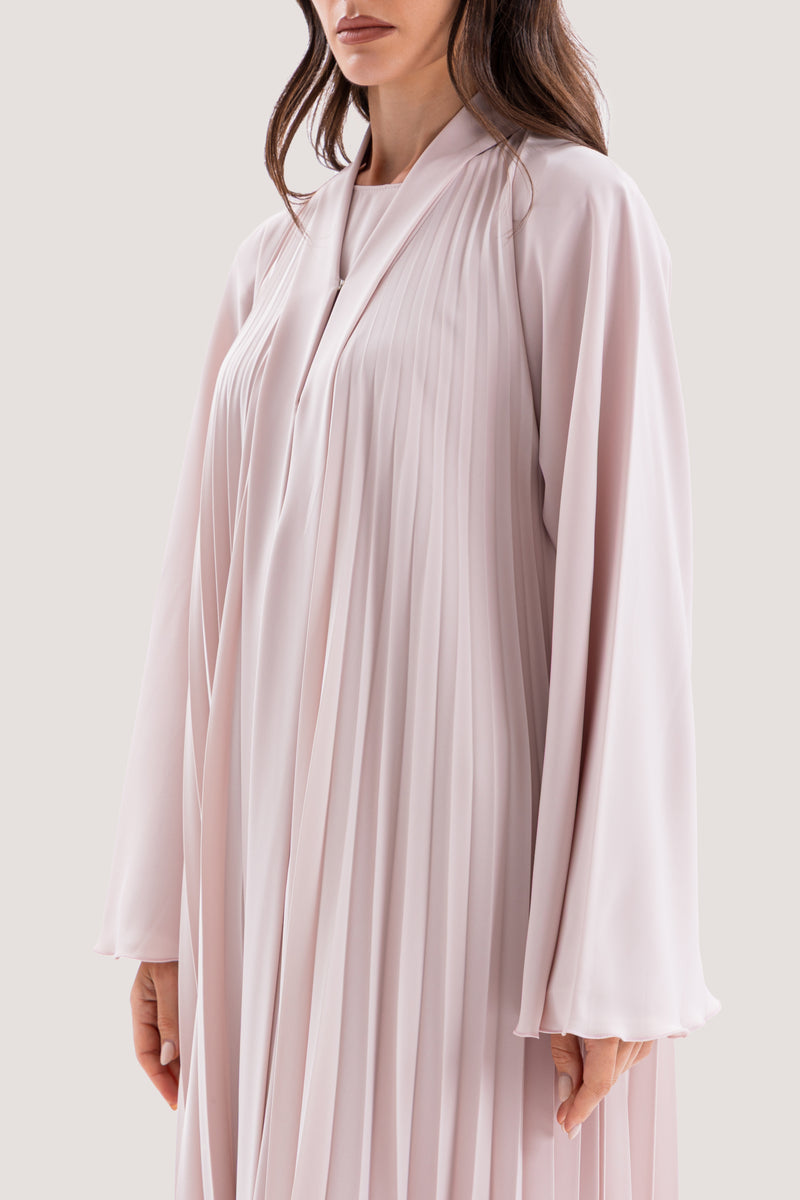
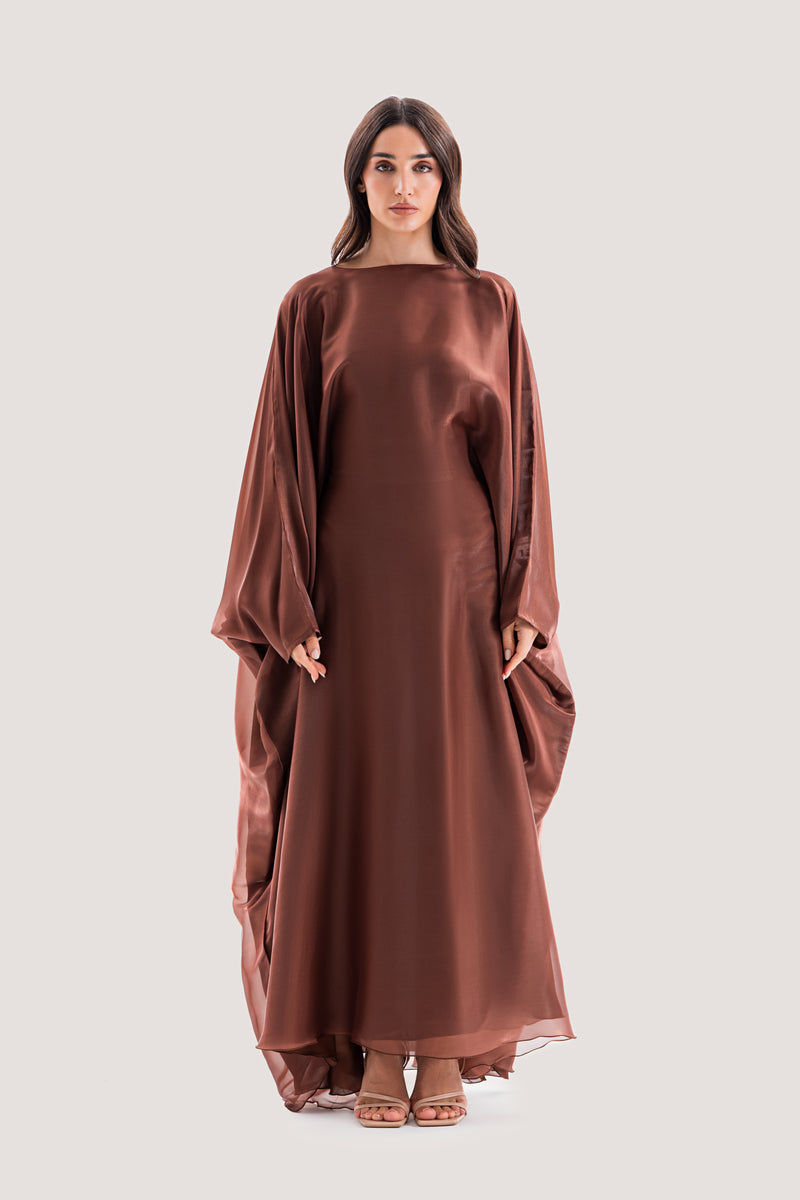
The last two decades moved the abaya from uniform to wardrobe. Ateliers began treating it the way couture treats a gown: considered fabrics such as Korean Nida, chiffon and organza; silhouettes from the clean, closed line to the winged butterfly; hand-finished embellishment measured in hours, not meters. The result is a garment that belongs equally in Dubai, Amsterdam and New York.
Everything we make begins there: one piece at a time, cut and finished by hand in our Dubai atelier.
Can anyone wear an abaya?
Can non-Muslim women wear an abaya?
Yes. The abaya grew out of Gulf and Muslim dress, and today it is worn by women of every background who appreciate modest, elegant clothing, including women who are not Muslim. No rule reserves it for one faith.
Is it respectful to wear one?
It is, when it is worn with the care it has always been given. Many women choose an abaya simply for its line, its coverage and its ease, which is exactly what the garment was made for.
Where should I start?
Wear it as a long, fluid outer layer: over a slim dress or trousers by day, over an evening dress for dinner. A piece with front buttons, such as our Essential Set, is the easiest first choice because it works open or closed.
Begin here


Questions about where to start? Write to us — we answer personally, from the atelier.